
Gathering Spaces That Function After Dark
Fire Pits & Water Features in Mt Vernon for properties needing outdoor focal points and usable evening areas
Outdoor fireplaces and fire pits extend yard usability into cooler months when unheated spaces would otherwise sit vacant, providing warmth that makes seating areas functional during spring and fall evenings common in Mt Vernon's climate. Circle B LawnCare designs custom fire pit installation and water features that integrate with existing hardscaping and landscape beds, using materials that withstand direct flame exposure or constant water contact without deteriorating. Ponds and decorative features require different base preparation than fire structures, but both depend on proper drainage to prevent water accumulation that would undermine stability or create safety hazards.
Natural-looking outdoor environments combine fire or water elements with surrounding plantings and stone placement that soften structural edges and create visual continuity across the yard. Fire pit design accounts for seating radius, wind patterns that affect smoke direction, and clearance from overhanging branches or structures. Water feature construction involves liner installation, pump placement for circulation, and edge treatment that conceals mechanical components while allowing access for maintenance.
Request a design consultation to discuss placement options and feature types suited to your outdoor space.
What Fire and Water Features Actually Accomplish
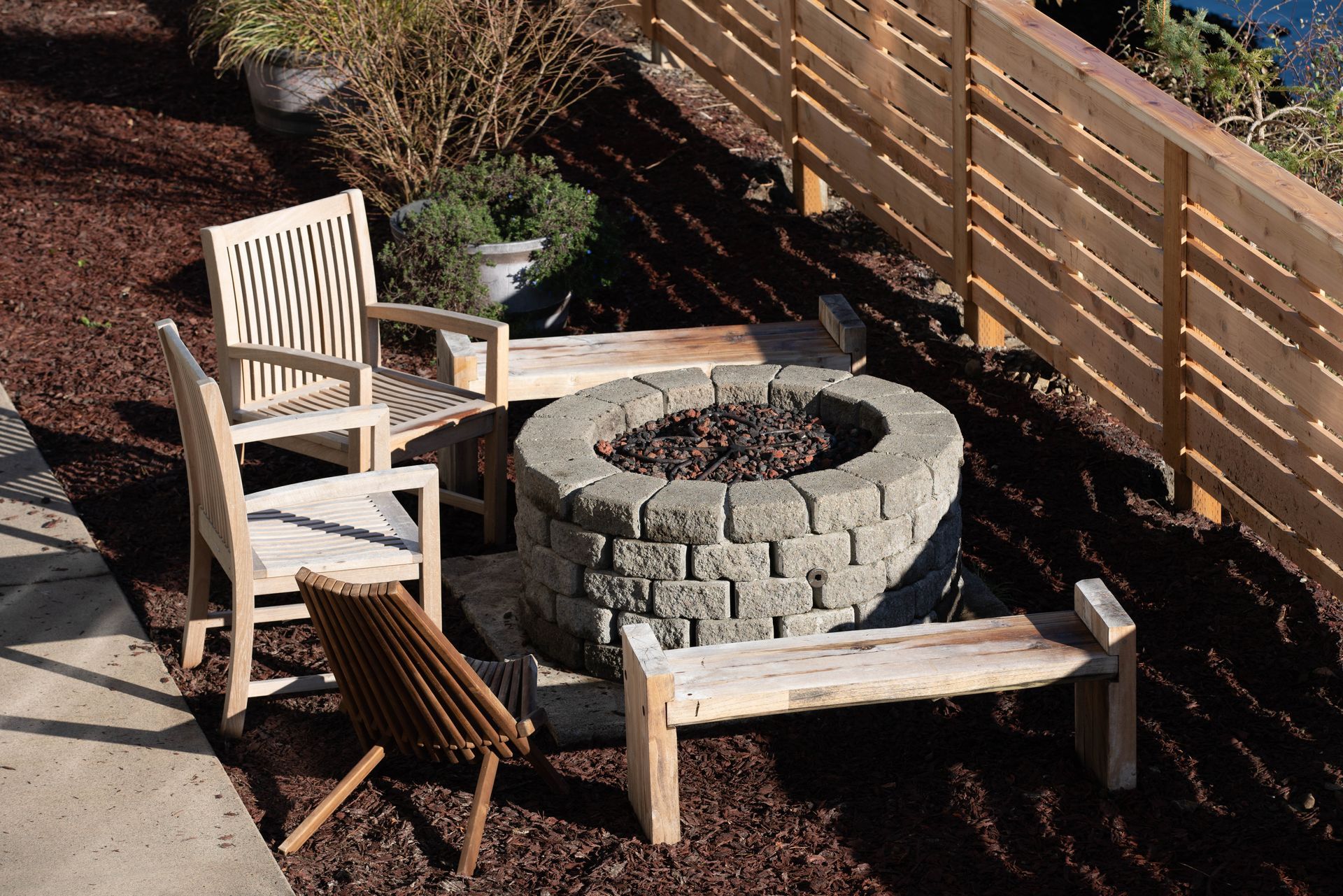
Custom outdoor living areas gain functional zones where fire provides warmth for seating areas or water features create audible ambiance that masks nearby traffic noise. Fire pit installation includes heat-resistant materials rated for sustained flame contact, typically fire brick for interior surfaces and natural stone or concrete block for exterior structure, with base preparation ensuring stability under repeated heating and cooling cycles. Water feature construction establishes circulation that prevents stagnation and mosquito breeding, with pump capacity matched to feature size and desired water movement.
After installation, you'll see defined gathering areas where seating arrangements orient around the fire source, level surfaces surrounding the feature that remain stable without settling, and integrated landscape elements that make the structure appear intentional rather than added as an afterthought. Fire pits provide heat radius that makes outdoor furniture usable when temperatures drop below comfortable levels, while water features produce sound and movement that draw attention without requiring electrical lighting to remain visible after dark.
Installation includes structural construction and base preparation but does not cover gas line connection for gas-fueled fire features unless coordinated with a licensed plumber. Water features include pump and basic plumbing but not electrical connections beyond low-voltage lighting. Decorative boulders or plantings around features are available but priced separately from base installation.
Questions Before Starting Your Project
Homeowners typically want to know about fuel options, maintenance requirements, and how features hold up through seasonal weather changes in Mt Vernon.
What is the difference between wood-burning and gas fire pits?
Wood-burning pits require no utility connection and produce traditional campfire ambiance but need ash removal and firewood storage, while gas pits offer instant ignition and no cleanup but require gas line installation and produce less radiant heat per BTU than wood flames.
How do you prevent water features from looking artificial?
Natural stone placement around pond edges, irregular shapes that avoid geometric outlines, and surrounding plantings that soften liner edges create visual integration with the landscape rather than an obvious constructed feature sitting on top of the ground.
When do water features need to be winterized?
Pumps and plumbing should be drained before sustained freezing temperatures arrive, typically in late November in this area, to prevent ice expansion damage that would crack housings or split lines, with systems restarted once overnight lows remain above freezing in spring.
Why do fire pits need specific base preparation?
Heat from sustained fires can crack paver surfaces or cause settling if the base beneath isn't stable, so fire pit installations include compacted aggregate and heat-resistant material layers that distribute weight and withstand temperature cycling without structural failure.
What maintenance do these features require?
Fire pits need occasional ash removal and inspection for cracked fire brick, while water features require pump cleaning, algae management, and seasonal water level adjustment as evaporation occurs during summer months, but neither demands daily attention to remain functional.
Circle B LawnCare installs fire pits and water features designed to integrate with your property's existing outdoor living areas and landscape layout. Schedule a property evaluation to review site conditions and feature options that match your intended use and aesthetic preferences.