
Cleared Surfaces When Weather Shuts Things Down
Snow & Ice Management in Mt Vernon for parking lots and walkways that become impassable during winter storms
A parking lot covered in several inches of snow prevents customer access, creates liability when ice forms underneath foot traffic, and forces business closures that extend beyond actual storm duration if clearing doesn't happen quickly. Sidewalks that ice over from freeze-thaw cycles, or building entrances where meltwater refreezes overnight, turn routine access into hazardous navigation. Circle B LawnCare provides snow removal and ice management in Mt Vernon for commercial properties where winter weather directly affects operations, safety, and liability exposure. The service focuses on restoring access and maintaining safe surfaces throughout storm events and the freeze-thaw periods that follow.
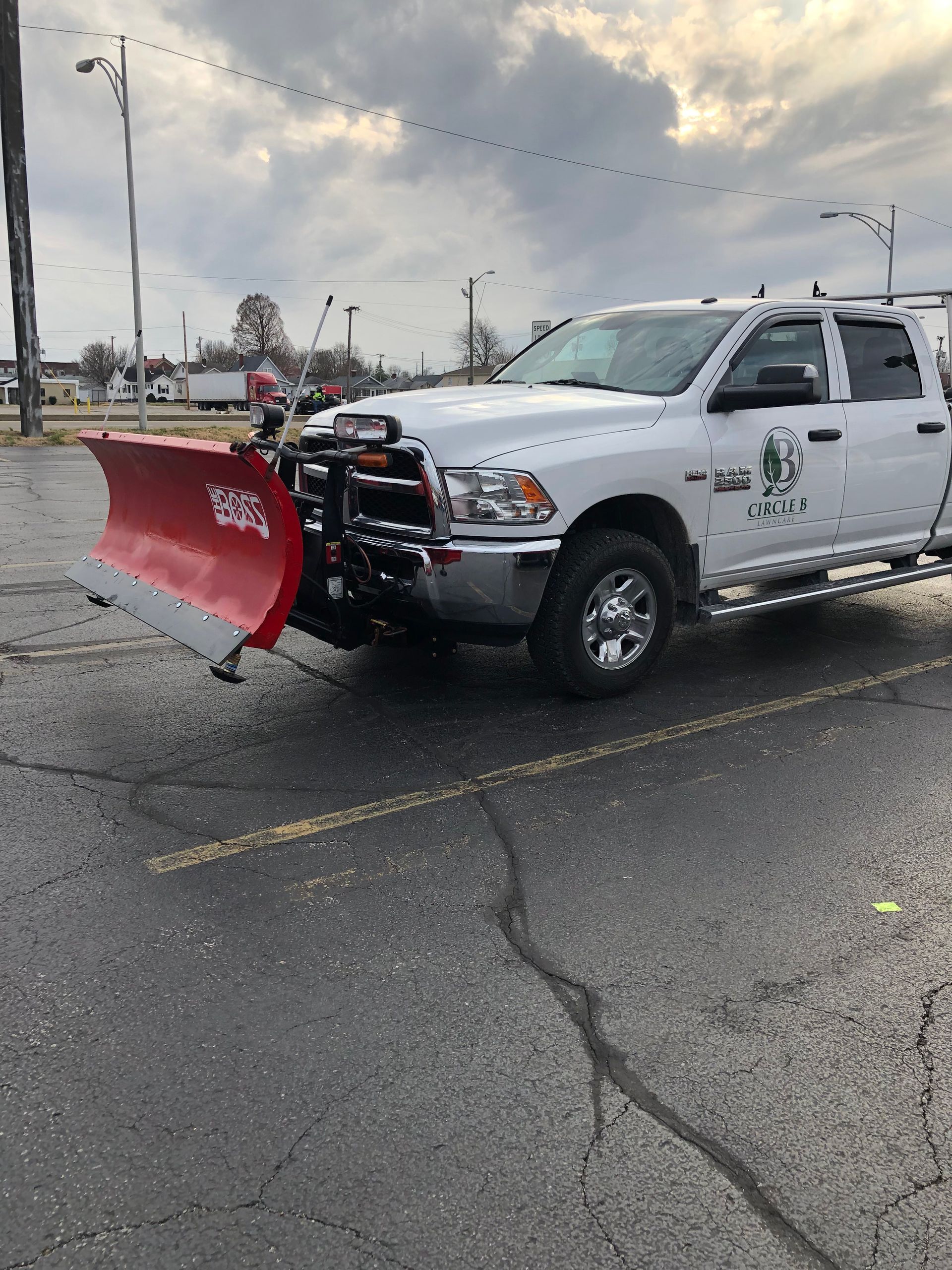
Snow removal uses plow equipment to clear parking areas, drive lanes, and loading zones, pushing accumulation to designated staging areas where it won't block drainage or create visibility obstacles. Ice management involves applying treatment materials before, during, and after storms to prevent bonding, break up existing ice, and provide traction on surfaces that can't be completely cleared.
Establish a service agreement that defines trigger depths, response timing, and priority areas before the first snowfall creates urgent needs.
How Treatment Timing Affects Ice Control
Pre-treatment applies materials before precipitation starts so ice can't bond to pavement, making removal easier and reducing the quantity of treatment needed after accumulation occurs. This approach works best when storm timing is predictable and temperatures stay within the effective range of the chosen deicer. Post-storm treatment breaks up ice that formed during the event and provides traction on surfaces where mechanical removal left a thin layer. Ongoing management addresses the freeze-thaw cycles common in southern Indiana winters, where daytime melting creates water that refreezes overnight into black ice that's nearly invisible but extremely slippery.
After clearing, you'll notice accessible parking spaces, clear pathways to building entrances, and defined traffic lanes instead of uniform white coverage that obscures where pavement ends and landscaping begins. Treated surfaces stay navigable even when temperatures drop again, preventing the refreezing that turns cleared areas back into hazards. Properties with active management avoid the compacted snow layer that builds up over multiple storms and becomes progressively harder to remove as winter continues.
Walkway clearing requires different equipment than parking lot work, using smaller machines or manual tools to address stairs, narrow paths, and areas near building foundations where plow blades can't operate safely. Priority sequencing matters for properties with multiple access points, ensuring fire lanes and main entrances get cleared before secondary parking areas, and that treatment materials reach high-traffic zones first when supply or time is limited during major storm events.
Answers to Frequent Winter Service Questions
Snow and ice management requires advance planning since decisions made before winter starts determine response capability when storms actually arrive.
What triggers a service response during winter weather?
Most contracts specify a snow depth trigger, typically two inches, at which point plowing begins, though some properties request clearing at lower thresholds if early morning access is critical, and ice management may occur independent of accumulation when freezing rain is forecast.
How quickly can parking lots be cleared after snow stops?
Response time depends on storm severity, total accumulation, number of contracted properties, and equipment availability, with most commercial lots cleared within a few hours of snowfall ending, though major storms that affect multiple clients simultaneously can extend timelines.
Why does ice management continue after snow is removed?
Melting snow creates water that refreezes when temperatures drop, cleared surfaces still accumulate frost and black ice overnight, and compacted snow left by traffic turns to ice under repeated vehicle weight, all requiring treatment beyond initial plowing.
What's included in sidewalk and walkway clearing?
Service typically covers pedestrian paths from parking areas to building entrances, including steps, ramps, and landings, though extensive sidewalk networks along public streets may be priced separately from core parking lot work depending on linear footage involved.
When should commercial properties finalize winter service contracts in Mt Vernon?
Agreements are typically established in October or early November before the first snow, since providers allocate equipment and personnel based on contracted properties, and last-minute requests during active storms often can't be accommodated when routes are already full.
Circle B LawnCare develops winter service plans based on property layout, access priorities, and operational requirements specific to each location. Arrange a site review in fall to map clearing zones and establish response protocols before winter weather arrives.