
Outdoor Surfaces Built for Foot Traffic
Hardscaping & Outdoor Living in Mt Vernon for properties needing durable patios and defined outdoor spaces
Paver and flagstone patios handle freeze-thaw cycles differently than poured concrete, with individual units shifting slightly without cracking when ground moisture freezes beneath the surface. Circle B LawnCare installs custom outdoor living areas across Mt Vernon using base preparation that addresses Indiana's seasonal ground movement and drainage requirements that prevent water pooling against home foundations. Each project begins with excavation to establish proper slope away from structures and compacted aggregate layers that resist settling under constant use.
Walkways and pathways require base depth that matches expected traffic patterns, with pedestrian routes needing less aggregate than areas supporting outdoor furniture or fire pit surrounds. Residential and commercial hardscaping follows different load specifications, but both depend on edge restraint systems that prevent paver migration and sand joint material that locks units together while allowing water to drain through rather than running across the surface. Material selection affects how the surface responds to temperature changes and the frequency of re-leveling over time.
Arrange an on-site consultation to evaluate grade conditions and discuss material options for your outdoor space.
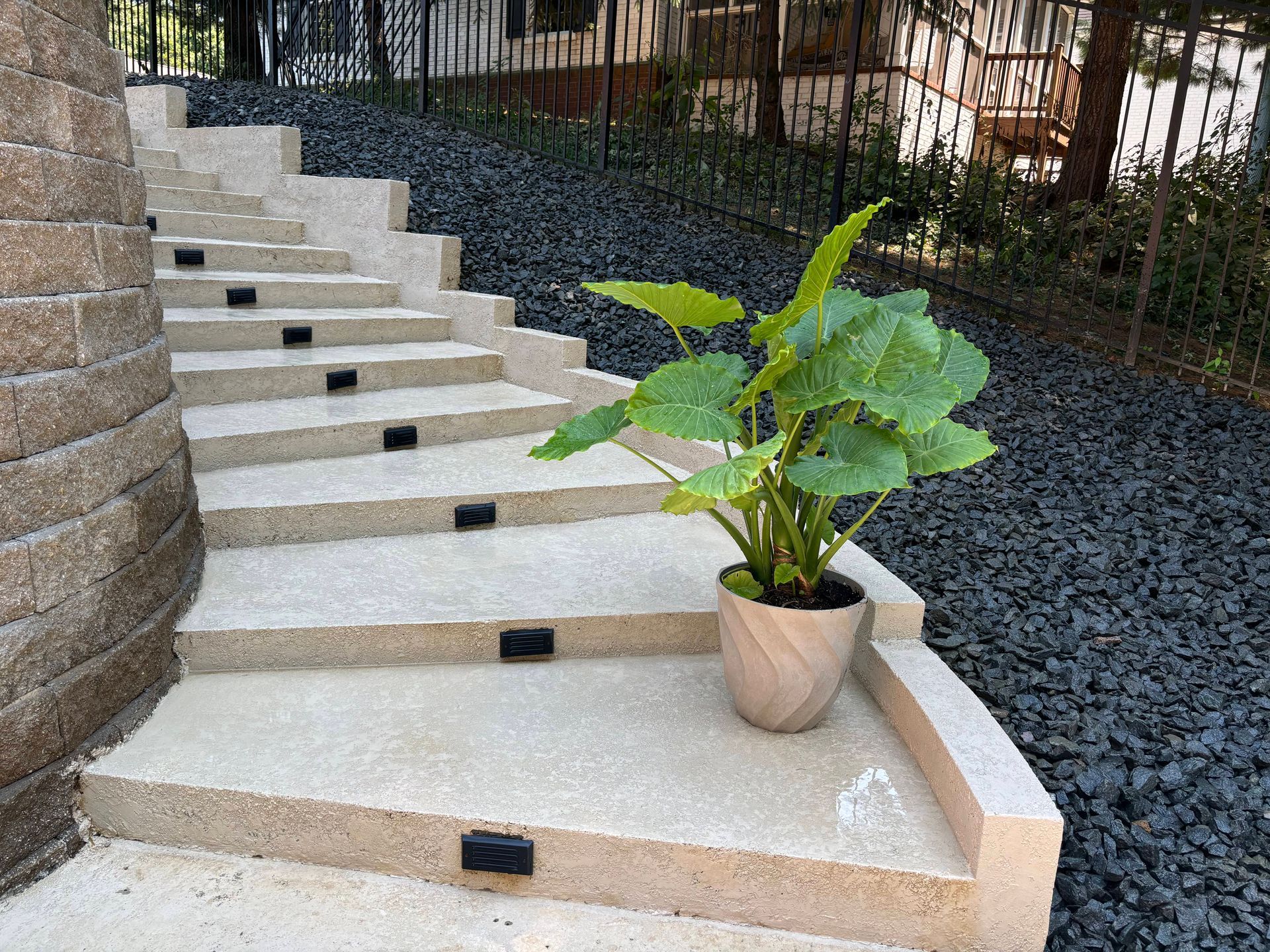
How Hardscaping Addresses Drainage and Stability
Base preparation involves excavating to a depth that accommodates compacted gravel layers, typically six inches for patios and four inches for walkways, with landscape fabric separating native soil from aggregate to prevent mixing that would compromise drainage. Slope is built into the base at a minimum of one percent grade to direct water away from structures, while permeable sand joints allow moisture to drain vertically through the paver system rather than sheeting across the surface during heavy rain events common in this region.
After installation, you'll see level surfaces that don't puddle or tilt, defined edges where pavers meet lawn or landscape beds without gaps or spreading, and stable footing that doesn't shift underfoot or develop low spots where water would collect. Seasonal freeze-thaw cycles may cause minor vertical movement in individual pavers, but properly installed systems return to level without cracking because each unit moves independently rather than as a monolithic slab.
Hardscaping installation includes base preparation, paver placement, and joint sand, but does not include demolition of existing concrete or asphalt surfaces unless specified. Projects on slopes exceeding fifteen percent may require retaining wall integration to create level platforms. Paver selection depends on availability at the time of installation, with close matches provided if specified products are unavailable.
Common Questions About This Service
Clients typically want to understand material differences, drainage solutions, and how hardscaping holds up under local weather conditions.
What is the difference between pavers and flagstone?
Pavers are manufactured units with uniform thickness and dimensions that install in repeating patterns, while flagstone consists of natural stone pieces with irregular shapes and varied thickness that require more hand-fitting during installation but offer unique visual texture.
How do you prevent settling in outdoor living areas?
Compacted aggregate base in multiple lifts creates a stable platform that resists compression under load, with each layer compacted separately to achieve density that won't shift as ground moisture fluctuates through Mt Vernon's seasonal cycles.
Why does water still drain through paver surfaces?
Sand joints between pavers remain permeable after installation, allowing water to filter through the surface and into the aggregate base rather than running off, which reduces puddling and keeps the surface usable shortly after rain events.
When do pavers need releveling?
Individual pavers may shift slightly during freeze-thaw cycles, particularly in the first year after installation as the base fully settles, but widespread releveling is typically unnecessary if base preparation was done correctly with adequate compaction and proper depth.
What maintenance does hardscaping require?
Joint sand replenishment every few years prevents paver shifting, and periodic cleaning removes organic staining, but the surface itself requires no sealing or resurfacing like poured concrete would over the same timeframe.
Custom outdoor living areas from Circle B LawnCare account for drainage requirements and base stability specific to each site's grade and soil conditions. Request a detailed estimate based on your property's layout and surface needs.