
Beds That Look Maintained Between Visits
Flower Bed Maintenance & Landscaping in Mt Vernon for properties requiring regular weeding and seasonal bed care
Weeds establish faster in disturbed soil and mulched beds than in established turf because open ground and moisture retention create ideal germination conditions for opportunistic species. Flower bed maintenance from Circle B LawnCare addresses weed removal before seed production, mulch replenishment to suppress new germination, and plant trimming that maintains bed definition across residential and commercial properties in Mt Vernon. Seasonal bed care accounts for growth cycles that vary by plant type, with perennials requiring deadheading and division while shrubs need selective pruning to control size without removing next season's buds.
Cleanup involves removing spent annuals, cutting back perennials after frost, and clearing leaf accumulation that would smother low-growing plants or create fungal issues in dense plantings. Mulching replaces decomposed material and restores the two- to three-inch depth needed to regulate soil temperature and prevent weed seed contact with soil. Each service visit includes inspection for pest damage or disease symptoms that would compromise plant health if left unaddressed between scheduled maintenance.
Schedule a bed evaluation to identify current weed pressure and establish a maintenance frequency that prevents overgrowth.
What Proper Bed Care Prevents Long-Term
Regular weeding and cleanup prevent seed production that would multiply weed density in subsequent growing seasons, with each removed plant representing hundreds of seeds that won't germinate next year. Mulch layers block light from reaching dormant weed seeds in the soil, breaking the germination cycle that allows annual weeds to reappear every spring. Plant trimming removes dead or diseased tissue before pathogens spread to healthy growth and maintains air circulation that reduces fungal pressure in humid conditions common during Mt Vernon summers.
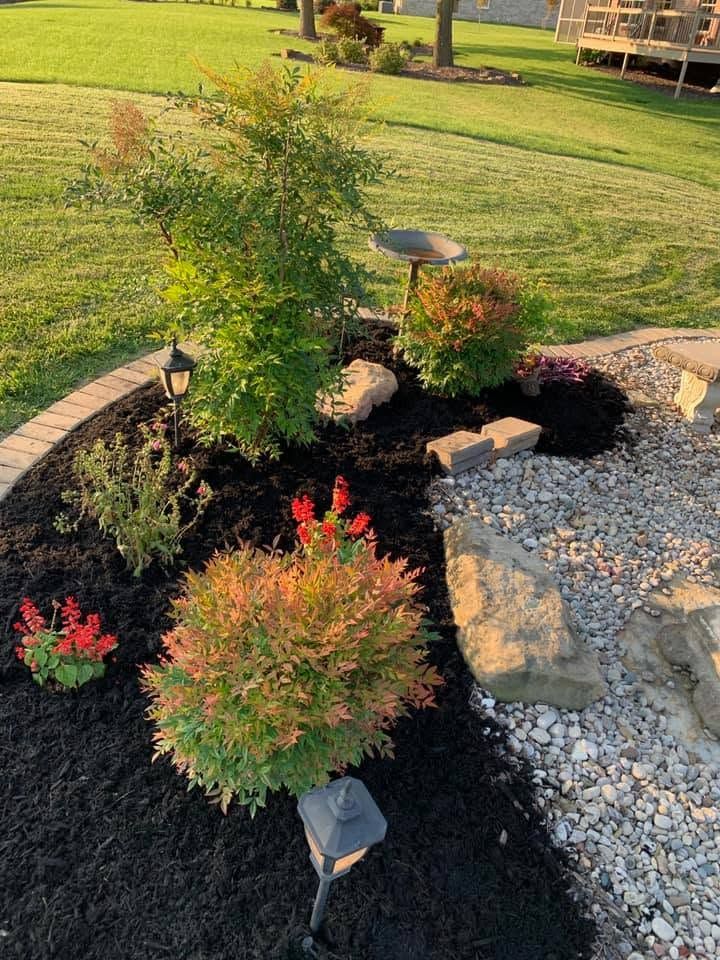
Between maintenance visits, you'll notice beds remain visibly weeded rather than becoming overgrown, mulch coverage stays consistent without bare soil showing through, and plants retain their intended shape instead of sprawling into walkways or crowding neighboring specimens. Seasonal color remains visible because spent blooms are removed before they detract from active flowers, and deciduous plants are cut back at appropriate times so energy goes into root development rather than sustaining dead foliage through winter.
Maintenance service includes weeding, mulching, and trimming of existing plantings but does not cover plant replacement, soil amendment, or pest treatment unless arranged separately. Mulch type and color are selected during initial consultation and remain consistent across visits. Service frequency is scheduled based on weed growth rates and seasonal demands, typically ranging from bi-weekly during peak growing season to monthly during dormant periods.
What Homeowners Typically Ask
Questions about bed maintenance often involve service frequency, mulch replenishment timing, and what tasks are included versus those requiring separate arrangements.
How often should flower beds be maintained?
Maintenance frequency depends on weed pressure and plant growth rates, with most properties benefiting from bi-weekly visits during spring and summer when weed germination and plant growth are most active, reducing to monthly service during fall and winter when growth slows in Mt Vernon's seasonal climate.
What type of mulch works best for flower beds?
Shredded hardwood mulch decomposes slowly while suppressing weeds and retaining moisture, though cedar mulch offers insect-repellent properties and dyed mulch maintains color longer, with selection based on aesthetic preference and existing landscape design rather than significant functional differences between quality products.
When should perennials be cut back?
Most perennials are cut to ground level after the first hard frost kills foliage, allowing the plant to redirect energy into root systems for winter dormancy, though ornamental grasses and plants with persistent seed heads are sometimes left standing for winter interest and cut back in early spring before new growth emerges.
Why does mulch need replenishment every year?
Organic mulch decomposes into soil over time, reducing depth below the two- to three-inch layer needed for effective weed suppression and temperature regulation, with annual replenishment maintaining coverage that prevents weed seed germination and moderates soil moisture fluctuations during dry periods.
What happens if weeds go to seed before removal?
Each weed that produces seed deposits hundreds or thousands of viable seeds into the soil, creating a seed bank that germinates over subsequent seasons and multiplies maintenance difficulty, making regular removal before seed maturity critical to preventing exponential weed population growth in flower beds.
Circle B LawnCare provides flower bed maintenance and seasonal care that keeps plantings healthy and beds visually clean throughout the growing season. Request a maintenance schedule based on your property's bed size and current weed conditions.